


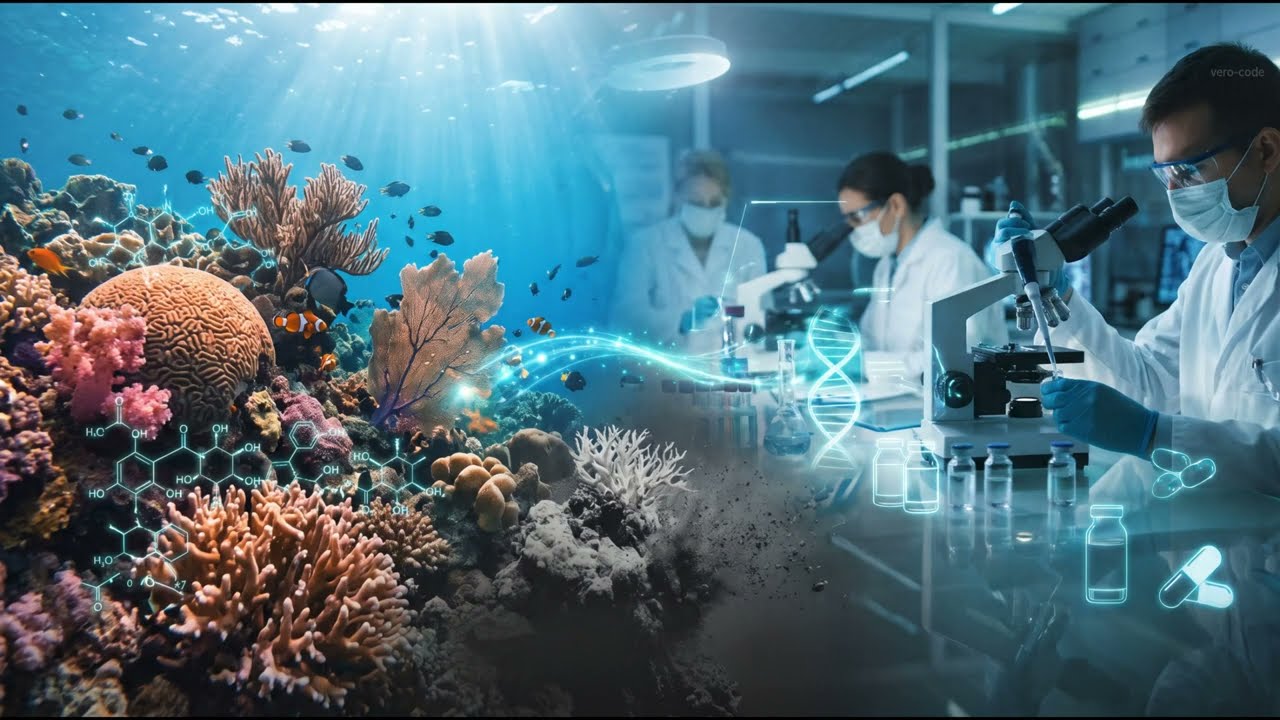
AI-powered coral bleaching early warning system. Monitors ocean thermal stress using NOAA satellite data across 17,504 coral reef polygons from UNEP-WCMC and generates emergency rescue protocols via NVIDIA Nemotron models hosted on Nebius Token Factory.
- Platform: Nebius Token Factory (
https://api.tokenfactory.nebius.com/v1, OpenAI-compatible) - Primary Model:
nvidia/Nemotron-3-Ultra-550b-a55b(MoE 550B / A55B, deep reasoning for complex ecological triage & rescue protocol synthesis) - Fallback Model:
nvidia/nemotron-3-super-120b-a12b(MoE 120B / A12B, automatic high-availability failover)
Using Nebius Token Factory accelerated development by letting me integrate hosted Nemotron inference into the FastAPI backend through an OpenAI-compatible API, without provisioning GPU instances or maintaining model-serving infrastructure. This let me focus on the application’s prompts, output validation, and user experience rather than model deployment.
- NVIDIA Nemotron-3 Ultra: Uses NOAA metrics and regional Tavily context to generate Pydantic-validated reef intervention protocols.
- Nebius Token Factory: Hosts Nemotron models via an OpenAI-compatible API.
- Tavily Search API: Finds regional ecological reports using the geocoded region when available; otherwise it uses a generic reef query.
- Google Maps Platform: Displays 17,504 UNEP-WCMC reef polygons and reverse-geocodes selected locations.
See ARCHITECTURE.md for the system design and request flows.
UNEP-WCMC reef polygon
        ↓
Google Maps + Geocoding (reef ID, coordinates, region)
        ↓
FastAPI backend
        ├── NOAA ERDDAP (thermal stress metrics)
        ├── Tavily (regional reports, live modes)
        └── Nemotron via Nebius (validated intervention protocol)
        ↓
Protocol displayed in the app
- AI Inference: NVIDIA Nemotron (Nemotron-3 Ultra 550B / Super 120B) on Nebius Token Factory
- Web Intelligence: Tavily Search API (real-time regional ecological reports & news)
- Mapping: Google Maps Platform (Datasets, Geocoding API) via @vis.gl/react-google-maps
- Backend: Python 3.14+, FastAPI, uv, HTTPX, Pydantic
- Frontend: React, TypeScript, Vite
- Global Reef Dataset: UNEP-WCMC Global Distribution of Coral Reefs (17,504 polygons)
- Satellite Thermal Telemetry: NOAA Coral Reef Watch 5km via PacIOOS ERDDAP
- Ocean Imagery:
- Specimen 01 (Acropora millepora, Great Barrier Reef · Lizard Island): by Francesco Ungaro on Unsplash.
- Specimen 02 (Diploria labyrinthiformis, Belize Barrier Reef · Mesoamerican Shield): by David Clode on Unsplash.
- Specimen 03 (Pocillopora damicornis, Coral Triangle · Raja Ampat Misool Arch): by Unsplash Marine Archive
- Both photographs are free under the Unsplash License.
The application supports 3 user roles configured in Settings:
- Judge: Uses live NOAA metrics with locally generated demo protocols and Tavily-style results. No Nebius or Tavily keys are needed.
- Scientist: Uses Nebius and Tavily API keys entered in Settings, stored in the browser's local storage, and sent to the backend with requests.
- Developer: Uses
NEBIUS_API_KEYandTAVILY_API_KEYfrombackend/.env.
Settings checks key presence; the backend validates keys on use and reports authentication errors.
Where to get API keys:
- Nebius Token Factory: tokenfactory.nebius.com/project/api-keys
- Tavily Search API: app.tavily.com/home
Create backend/.env (optional if using For Judges mode or entering keys in the UI):
NEBIUS_API_KEY=your_nebius_api_key
NEBIUS_BASE_URL=https://api.tokenfactory.nebius.com/v1
NEBIUS_MODEL=nvidia/Nemotron-3-Ultra-550b-a55b
NEBIUS_BACKUP_MODEL=nvidia/nemotron-3-super-120b-a12b
TAVILY_API_KEY=your_tavily_api_key
Create frontend/.env:
VITE_GOOGLE_MAPS_API_KEY=your_google_maps_api_key # Requires Maps JavaScript API & Geocoding APIcd backend
uv synccd frontend
npm installDouble-click start.bat or run:
start.batThis launches both backend (http://127.0.0.1:8000) and frontend (http://localhost:5173) in parallel terminals.
cd backend
uv run fastapi dev src/backend/main.py
Server starts at http://127.0.0.1:8000 (Docs at http://127.0.0.1:8000/docs)
cd frontend
npm run dev
App starts at http://localhost:5173
| Method | Endpoint | Description |
|---|---|---|
GET |
/reefs |
Centroids for all 17,504 reefs (id, lat, lng) |
GET |
/reefs/{id}/stress |
Live NOAA thermal stress data (sst, tempAnomaly, dhw, baa, alertLevel) |
GET |
/reefs/{id}/intervention?lat={lat}&lng={lng}&location={region} |
Rescue protocol; accepts x-nebius-key, x-tavily-key, x-mock-mode: true, or mock=true |
GET |
/config/dev-check |
Diagnostics checking if NEBIUS_API_KEY and TAVILY_API_KEY are set in .env |
GET |
/ |
Health check ({"status": "ok"}) |
# Verify Nebius connection:
python backend/scripts/test_nebius.py

# Test live Tavily search:
python backend/scripts/test_tavily_live.py

# Test end-to-end live satellite fetch + Nemotron-3 Ultra protocol generation:
python backend/scripts/test_intervention_live.pythermoreef/
├── backend/
│ ├── pyproject.toml
│ ├── uv.lock
│ ├── scripts/
│ │ ├── download_reefs.py
│ │ ├── geojson_to_centroids.py
│ │ ├── test_nebius.py
│ │ ├── test_tavily_live.py
│ │ └── test_intervention_live.py
│ └── src/backend/
│ ├── main.py # FastAPI endpoints
│ ├── constants.py # Backend configuration
│ ├── tavily.py # Tavily ecological intelligence
│ └── nemotron/ # Modular Nemotron package
│ ├── __init__.py
│ ├── client.py # Token Factory API client
│ ├── schemas.py # Pydantic data contracts
│ ├── prompts.py # Structured triage prompt templates
│ └── mock.py # NOAA-driven local demo protocol generator
├── frontend/
│ ├── src/
│ │ ├── App.tsx
│ │ ├── constants.ts # Centralized constants
│ │ ├── components/
│ │ │ ├── ReefMap.tsx # Main map component with vector layer
│ │ │ ├── SettingsPanel.tsx# In-frame settings panel
│ │ │ ├── InterventionPanel.tsx # In-frame rescue protocol console (replaces map view)
│ │ │ ├── InterventionModal.tsx # Backwards compatibility export
│ │ │ ├── map/ # Header, reef info card, NOAA stress metrics
│ │ │ ├── settings/ # Mode selector, Judge, Cloud, Dev tabs
│ │ │ └── intervention/ # Shading, Triage, Monitoring, Web Intel tabs
│ │ ├── styles/ # Modular scoped CSS styling
│ │ │ ├── common.css # Shared modal, buttons, badges, utilities
│ │ │ ├── map.css # Map layout coordinator
│ │ │ ├── header.css # Observatory masthead
│ │ │ ├── ocean-bg.css # Underwater canvas and plaque
│ │ │ ├── reef-card.css # Reef telemetry card
│ │ │ ├── footer.css # Floating observatory footer
│ │ │ ├── settings.css # Settings dialog
│ │ │ └── intervention.css # Protocol tabs and views
│ │ ├── types/ # Centralized TypeScript types
│ │ │ ├── reefs.ts # Reef contracts
│ │ │ └── modals.ts # Shared modal types
│ │ └── data/
│ │ └── reefs.ts # TypeScript re-exports
│ └── package.json
├── README.md
├── LICENSE
└── .gitignore
ThermoReef is an AI-assisted decision-support system designed for ecological modeling, early warning, and conservation research. Intervention protocols synthesized by NVIDIA Nemotron-3 Ultra are intended to assist planning and must be reviewed by accredited marine biologists and regional environmental authorities before physical field deployment.
Licensed under the Apache License, Version 2.0. See LICENSE for details.