


python-first web applications with a genuine shadcn/ui renderer.
shadlet is a framework that lets developers build modern web applications in python. react renders the interface with authentic shadcn/ui components. python manages application state, events, routing and server-side logic. end users run applications with python only; node.js is only needed to build the renderer.
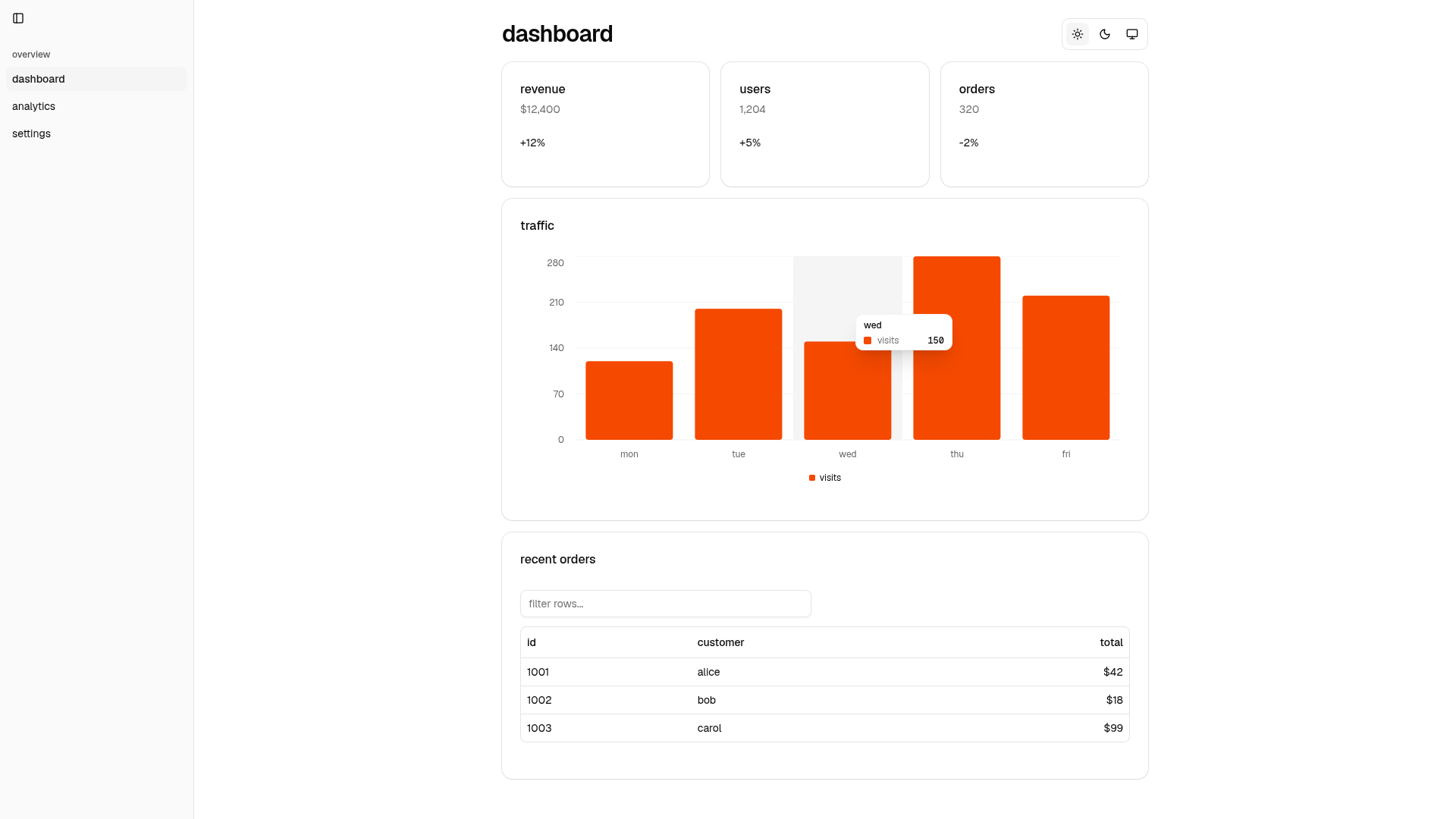
- python developers can build web applications using pure python.
- the frontend is genuine shadcn/ui (tailwind + base-ui), not an imitation.
- components are strictly typed and validated across the protocol.
- reactive session state, async event handlers, and incremental patches.
| feature | shadlet | typical python web ui |
|---|---|---|
| rendering | react + authentic shadcn/ui | server-rendered templates |
| state | reactive session state | request/response state |
| components | 56 built-in shadcn/ui components | custom widget sets |
| packaging | python wheel with bundled renderer | manual frontend build |
- typed python component api with enums and validation
- 56 built-in components from shadcn/ui base-vega
- official bundled geist variable & geist mono typography
- smooth animations, backdrop blur, and spring physics
- automatic port switching when default port is occupied
- hot reload with diff-based patches
- session-scoped reactive state
- async event handlers with cancellation
- versioned json protocol with incremental patches
- typer and rich cli
- github project templates
- mkdocs documentation website
requirements:
- python 3.11 or newer
node.js is only required for maintainers building the renderer from source.
uv pip install -e '.[dev]'verify:
shadlet doctor
shadlet infocreate a project:
shadlet create my-app
cd my-app
shadlet dev
or write main.py directly:
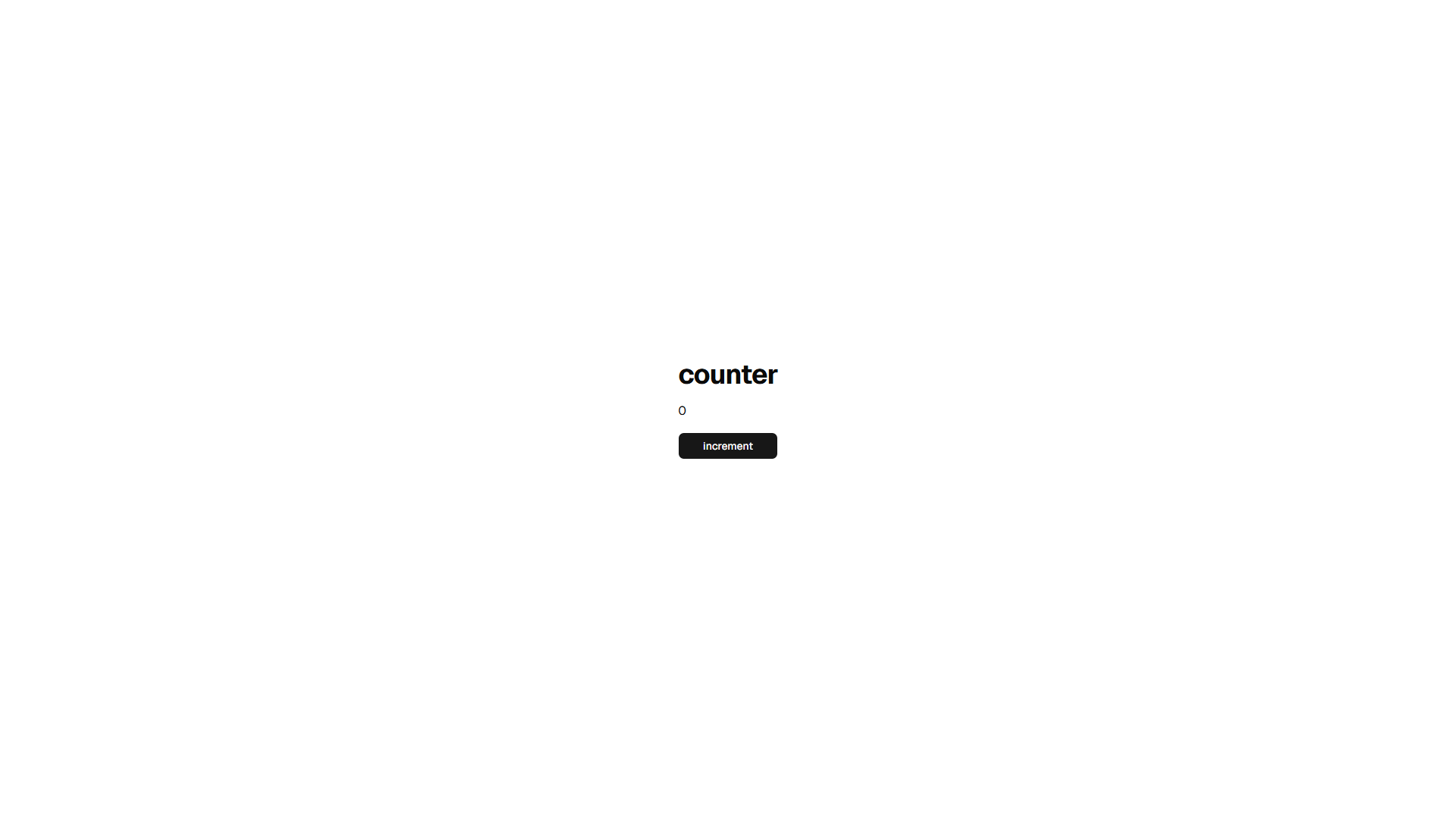
import shadlet as ui

app = ui.App("counter")


@app.page("/")
def home(ctx: ui.Context):
    count = ctx.state(0, key="count")

    def increment(event: ui.ClickEvent):
        count.value += 1

    return ui.Center(
        ui.Column(
            ui.Heading("counter"),
            ui.Text(count),
            ui.Button("increment", on_click=increment),
            gap=16,
        ),
        min_height="100vh",
    )


if __name__ == "__main__":
    app.run()
run:
python main.pyopen http://127.0.0.1:8000.
flowchart LR
  A[python application] --> B[component api]
  B --> C[validation and normalisation]
  C --> D[versioned json protocol]
  D --> E[react renderer]
  E --> F[browser]
- python handles application logic.
- react handles rendering.
- communication uses a versioned json protocol over websocket.
shadlet/
  packages/python/shadlet   python runtime
  packages/renderer         react renderer
  templates                 project templates
  examples                  example applications
  tests                     python tests
  docs                      documentation
examples/counterminimal counterexamples/todotodo list with formsexamples/dashboarddashboard with charts and tables
run any example:
cd examples/counter
PYTHONPATH=../../packages/python python main.pyfull documentation is in docs/ and built with mkdocs.
python -m mkdocs serve
python -m mkdocs build --strictclone and set up:
git clone https://github.com/programmersd21/shadlet
cd shadlet
uv venv --python 3.11
uv pip install -e '.[dev]'
cd packages/renderer && npm ci
checks:
ruff check .
ruff format --check .
mypy .
pyright packages/python/shadlet
pytest
cd packages/renderer && npm run lint && npm run format:check && npm run typecheck && npm run test && npm run build
python -m mkdocs build --strict- python 3.11 or newer
- browsers: modern desktop browsers
shadlet is developed by human maintainers with assistance from ai tooling. ai assistance is used for drafting, refactoring, documentation, and review support. all code is reviewed by maintainers and must pass the project's lint, type, test, and build checks before release. see contributing for the ai code policy.
mit licensed. see LICENSE for full details.
release ready (v0.1.1). see docs/limitations.md for the verified support matrix and capabilities.